
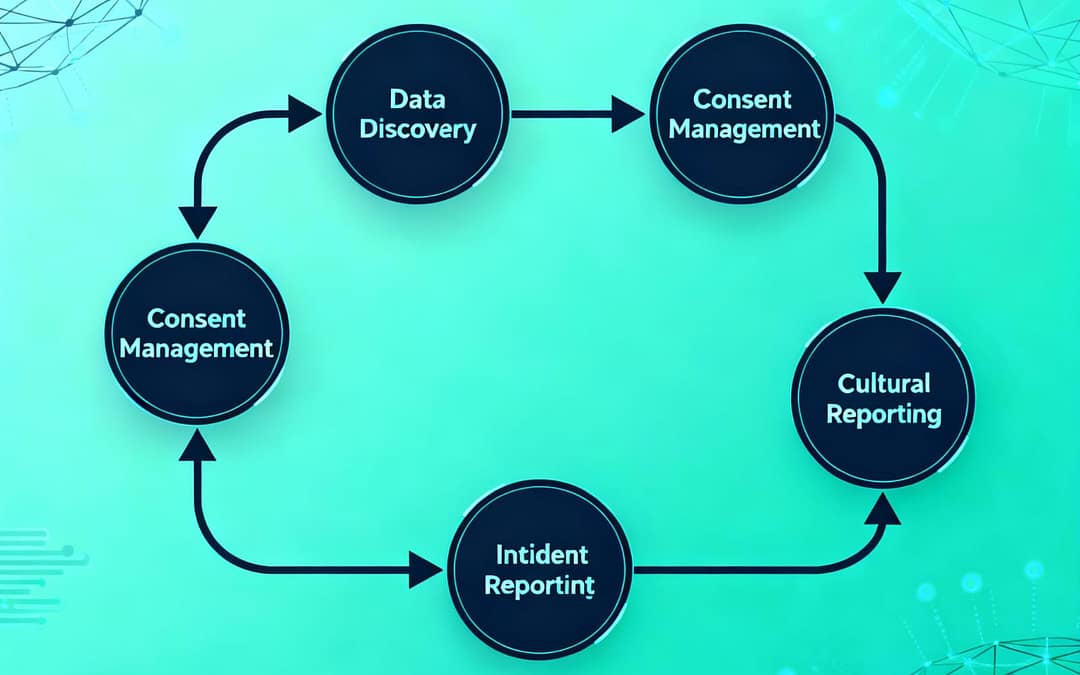
In today’s rapidly evolving business and threat environment, many enterprises believe they are prepared for disruption. They invest in technology, adopt industry frameworks, and meet regulatory requirements. However, despite these efforts, failures still occur. The reason often lies in invisible gaps—critical weaknesses that remain hidden until a crisis exposes them.
While most organizations proudly showcase privacy policies and compliance certificates, the foundation of real data protection often remains weak. The gap isn’t in awareness—it’s in execution. For enterprises preparing to align with the Digital Personal Data Protection (DPDP) Act and global privacy frameworks, five blind spots consistently hinder meaningful progress.
Data Discovery and Classification: The Hidden Blind Spot
Many organizations lack a clear picture of where personal data actually lives. Over the years, data has sprawled across email archives, shared drives, third-party systems, and even dormant applications. Without an accurate map of these data assets, applying privacy principles is nearly impossible.
Achieving visibility requires moving beyond manual audits. Organizations must deploy automated discovery tools, establish classification taxonomies, and routinely reconcile inventories with operational realities. Data governance begins not with policy—but with knowing what exists, where it resides, and why it’s stored.
Consent Mechanism Overhaul: Redesigning for Trust
Traditional systems handle consent through static checkboxes buried in lengthy forms. That approach no longer holds up in a digital economy built on user control and transparency.
Building a dynamic consent mechanism demands design thought, not just compliance awareness. It should allow users to grant, manage, or withdraw consent at any stage with clarity. True privacy-forward design integrates with the user experience, enabling informed choice while eliminating friction. The redesign must be both technically sound and ethically considerate.
Third-Party Accountability: The Overlooked Exposure
Even with strong in-house privacy controls, external processors often remain the weakest link. Vendors handle payroll data, analytics reports, and marketing databases—yet many organizations still rely on generic contract templates that omit DPDP-specific clauses.
Third-party accountability begins with due diligence and continues through the entire vendor lifecycle. Contracts should clearly define roles, responsibilities, and breach escalation timelines. More importantly, vendor compliance should be verified continuously, not assumed. Data protection is only as strong as the least prepared processor in the chain.
Incident Reporting Preparedness: Turning Policy into Action
Regulations often stipulate that data breaches must be reported within 72 hours, but few organizations have the operational muscle to meet that timeline. Most lack predefined escalation frameworks, real-time alerting, or authorized communication channels.
To be prepared, an organization must move beyond static checklists. Periodic simulation of incidents, clear responsibility matrices, and a culture of urgency are the real differentiators. The objective is precision under pressure—responding quickly, yet with verified accuracy and contextual clarity.
Cultural Shift: Embedding Privacy in Behavior
No privacy framework succeeds without a shift in mindset. Technology can set boundaries, but human behavior defines whether those boundaries hold. In most enterprises, privacy is still viewed as a compliance function rather than a shared responsibility.
Creating a privacy-conscious culture means embedding accountability into daily routines. Regular training, leadership-driven advocacy, and visible modeling of ethical data use gradually reshape collective behavior. When employees see privacy as integral to brand integrity, not just regulation, the organization’s privacy posture becomes self-sustaining.
Looking Ahead: From Compliance to Confidence
Privacy transformation isn’t achieved through paperwork or audit readiness—it evolves through self-awareness, architectural redesign, and behavioral consistency. The organizations that succeed will not only meet regulatory standards but also set benchmarks for data ethics.
Building privacy by design is less about control and more about credibility. It is the difference between a company that protects data because it must and one that protects data because it should.
Conclusion
Enterprise readiness is not defined by frameworks or certifications alone. It is measured by how effectively an organization can respond, recover, and continue operating when faced with unexpected challenges. By identifying and closing these invisible gaps, enterprises can move from perceived readiness to real resilience.